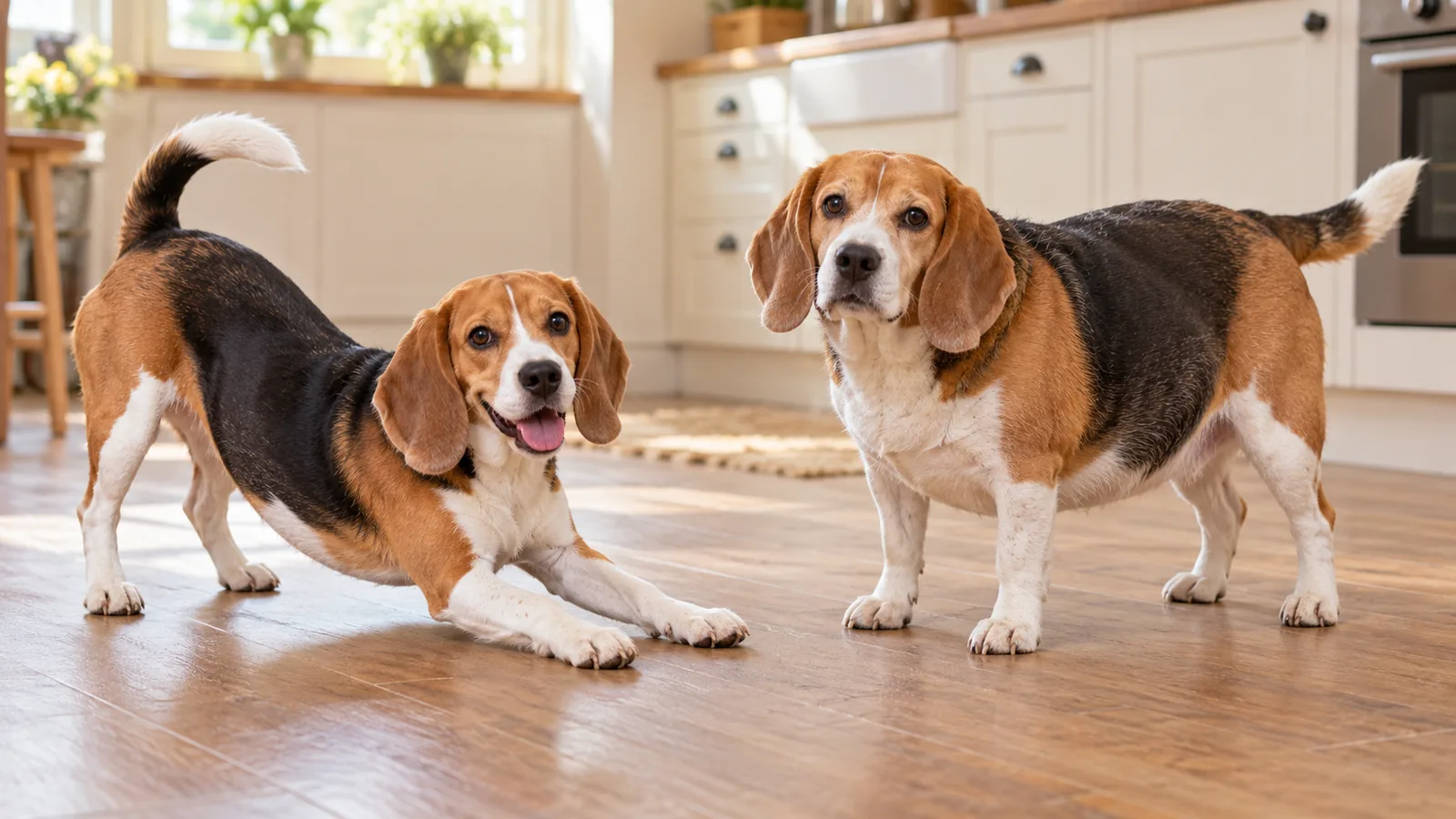
Extra padding stops being a cosmetic question and becomes a medical one at about a body condition score of 6 out of 9, roughly 10% above your pet's ideal weight. That is the stage where arthritis, diabetes and breathing problems become more likely, and most dogs and cats still look completely normal to the people who love them. Because the change happens so gradually, a hands-on score once a month picks up what your eye and the scales both miss, particularly under a thick coat. Letting a six drift towards an eight raises the health risk and makes the weight far harder to take back off.
Weight is a sensitive subject, and we are not going to make you feel bad about an extra treat. At The Vale Veterinary Group in Devon, our nurses run weight clinics with tailored nutritional advice, scoring your dog or cat by hand and setting a target that fits your household. Four nurse visits are also included in our Premier Paws Club, so these checks need not wait for the annual booster. If you are not sure where your pet sits on the scale, arrange a weigh-in with us and we will show you exactly what to feel for.
Body Condition Score: The Basics
- A body condition score reads fat and muscle together on a 1 to 9 scale, so two dogs at the same weight on the scales can sit two points apart.
- Scoring is a hands-on check once a month: look from above, look from the side, then feel the ribs, the waist and the belly.
- A score of 6 or more raises the risk of arthritis, diabetes, disc disease and breathing trouble, and the risk climbs with every point above that.
- Portions worked out from your pet's ideal weight drive most of the loss. Exercise helps, but it can't undo a bowl that's too full.
What Should You Feel For When You Check Your Pet at Home?
The body condition score chart runs from 1 to 9, and it's the same one we score from at the practice. At 1 the ribs and spine stand out sharply; at 9 fat covers the ribs and the waist has gone altogether. Most dogs and cats are ideal at 4 to 5, and placing your own pet on that scale takes a couple of minutes.
Three checks, in this order:
- From above: Look down at your standing pet for a waist behind the ribs. At an ideal score you'll see the classic hourglass shape.
- From the side: The belly should slope up from the end of the ribcage towards the back legs, rather than running flat or sagging.
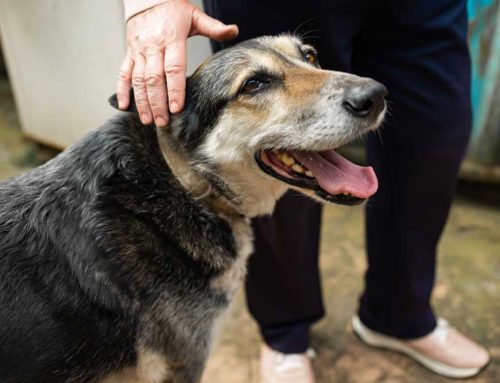
- With your hands: Run flat palms along the ribcage. Ideal ribs are easy to count under a thin covering and don't need firm pressure to find. Then check the spine, the base of the tail and the inside of the back legs, where fat settles once a pet reaches a 7.
| Score | What your hands find | What it means |
| 1 to 3 | Ribs, spine and hips obvious with no fat cover, waist exaggerated | Underweight, worth a check before any feeding change |
| 4 to 5 | Ribs easy to count under a thin layer, clear waist, belly tucked | Ideal for most dogs and cats |
| 6 to 7 | Ribs need real pressure to find, waist blurred, belly sagging | Overweight, where health risk starts climbing |
| 8 to 9 | No ribs findable, fat over the spine and tail base, no waist | Obese, needs a structured plan and monitoring |
Do it on the first of the month and write the number on the calendar. Coats hide a great deal, and a Golden Retriever or a long-haired cat can gain a point without looking any different. If you're not sure of the number you're getting, ring your nearest branch in Cullompton, Tiverton, Honiton or Uffculme and book a few minutes with a nurse, who'll put your hands in the right places.
What Does Extra Weight Do Inside the Body?
Fat isn't inert padding. It's active tissue that releases inflammatory signals, and it adds mechanical load to every joint and every breath.
- Joints and spine: Extra load makes arthritis worse and raises the risk of cruciate ligament tears. In a heavy dog, intervertebral disc disease can move from reluctance to jump onto the sofa to hind-leg weakness that needs emergency surgery within hours.
- Blood sugar: Fat tissue interferes with how insulin works, so diabetes is linked to increased risk in overweight pets, and treatment then means twice-daily injections, repeat glucose checks and a fixed feeding routine for the rest of that pet's life. Pancreatitis is commoner in heavier dogs too.
- Bladder: Overweight pets move less and drink less, making urinary tract diseases and urinary stones more likely.
- Skin: Infections are commoner as well, partly because a heavy dog or cat can't reach round to groom properly.
- Heart and breathing: Heavier pets are more prone to high blood pressure, and fat around the chest leaves the lungs less room to fill, with flat-faced breeds carrying the least margin, so a heavy Pug or British Shorthair struggles on a warm Devon afternoon.
Weight changes what an anaesthetic asks of us as well, because drug dosing, airway access and positioning are all harder in an obese patient, so a routine dental carries more risk than it needs to. In a long study of Labrador littermates, the dogs kept lean lived longer and needed treatment for arthritis later than the ones fed more. The food is the cheap part too, next to insulin and glucose monitoring for a diabetic cat, long-term pain relief for sore joints and occasionally spinal surgery. Holding a dog or cat at a 4 or 5 buys more good years, with lower veterinary care costs over their lifetime.
Is a Pet Who Is Too Thin Also at Risk?
Being underweight, a score of 3 or lower, brings its own problems: immune defences work less well, there's no reserve to burn through an illness, thin pets struggle to hold their temperature, and lost muscle makes stairs and litter trays harder. Healing after surgery or injury takes longer as well. A pet losing condition without a diet change needs investigating, not simply more food.
What Does Weighing Your Pet Leave Out?
The scales can't tell fat from muscle, so a dog or cat can hold exactly the same weight for two years while swapping muscle for fat. Build matters as well: a Whippet at an ideal 5 looks far leaner than a Labrador scoring the same, and because muscle is denser than fat, a fit working Collie can outweigh a soft one of the same height.
Every physical exam in our small animal care includes a hands-on score recorded next to the weight. We're also watching how your pet gets through the day: whether they still take the stairs in one go, whether a cat can groom their own back end, whether they now lag on the walk they used to lead.
How Do You Work Out the Right Daily Portion?
Work the daily target out from your pet's ideal weight rather than today's weight, because a calorie calculator set to the heavier number will only keep the pet where it already is. Then weigh the food on kitchen scales, because guessing with a mug or a heaped scoop is where much of the extra creeps in.
- Count everything: The dental chew, the training treats and the last spoonful of yoghurt all come out of the day's total.
- Keep treats to a tenth: Treats can stay at around a tenth of the day's calories, and they work just as well cut smaller.
- Fill one jar a day: Weighing one day's whole ration into a jar each morning, treats included, stops two people feeding the same dog twice.
Skip the crash diet, especially in cats, because hepatic lipidosis can follow just a few days of sharply reduced intake and shuts the liver down quickly enough to be fatal. A cat who goes off food entirely for 24 hours needs a phone call that day. Never use human weight-loss tablets or appetite suppressants on a dog or cat.
Does a Weight-Loss Diet Have to Come From the Vet?
A weight-loss diet doesn't have to be prescription, but the two options aren't the same product, and the difference is testing rather than marketing. Choosing a pet food on the strength of the words "light" or "healthy weight" tells you little, since neither term requires a feeding trial, while prescription weight diets are trialled to prove they take fat off without stripping lean muscle.
| Compare | Prescription weight diet | Shop-bought "light" |
| Evidence | Feeding trials showing fat loss with muscle held | Reduced fat, no trial required |
| Make-up | High protein and fibre, so smaller portions still satisfy | Varies widely by brand |
| Suits | Pets with a lot to lose, or dieting alongside arthritis or diabetes | Pets at a 6, where portion control does the work |
| Monitoring | Prescribed alongside regular reweighs with our nurses | None |
Which one suits your pet depends on the score and how much has to come off, and we can work that out with you at a weigh-in.
How Fast Should the Weight Come Off?
Weight should come off slowly. A safe pace for dog weight loss is around 1 to 2 per cent of body weight a week, which for a 30 kg Labrador is roughly 300 to 600 g, and a 6 usually comes back to a 5 over a few months of that. Cat weight loss needs to run slower still, closer to half a per cent to 1 per cent a week.
- Meals on a clock: Two or three measured meals at set times beat free access, and a slow-feeder bowl helps the dog who inhales dinner in seconds.
- Make them work for it: Scatter dry food across the lawn, hide small portions around the house for cats, or load the ration into a puzzle feeder.
- Swap, don't stop: Carrot, green beans and courgette fill the gap for dogs. For cats, a few pieces of their own weighed-out kibble go further than a bag of cat treats.
- Move within their limits: Build dog walks up gradually rather than doubling them on a Saturday, and keep a stiff older dog to flat, steady ground. Wand toys twice a day suit a cat better than trying to coax them into longer sessions.
- Track it: Score at home monthly, and book a weigh-in at one of our nurse clinics every few weeks while the weight is coming off, so portions get adjusted when progress stalls rather than months later.
Is an Illness Behind the Weight Change?
Weight that moves on an unchanged diet sometimes has a medical cause, and an exam with blood and urine samples answers most of these questions.
- Hypothyroidism in dogs: Weight gain alongside a dull coat, flaky skin and a habit of seeking out the warmest spot in the house fits hypothyroidism.
- Cushing's disease: A pot-bellied outline with thinning hair, a bottomless appetite and constant thirst is the pattern, and the shape changes without much actual fat being gained.
- Diabetes: It can pull either way, often taking weight off a dog who's eating more than ever.
- Hyperthyroidism in cats: An older cat who eats enthusiastically and still gets lighter, with a scruffy coat and a habit of yowling at three in the morning, is the classic picture of an overactive thyroid, known as hyperthyroidism.
- Kidney disease and cancer: Chronic kidney disease and cancer both strip condition slowly.
A few things look like weight gain and aren't. Heart disease can fill the abdomen with fluid, and an enlarged liver or spleen pushes the belly out while the rest of the body thins, so an ultrasound scan tells fluid from fat. Treating what sits underneath often makes healthy weight change possible again, and annual blood and urine screening while your pet is well gives us their normal to compare against the year a value shifts.
Does Body Condition Scoring Change as Pets Get Older?
The target stays at 4 to 5 for life, but what threatens it keeps changing. Puppies and kittens need enough to grow on without getting round, adults need a steady maintenance portion, and older pets lose muscle while fat creeps up, which can hold the weight flat while the score rises.
A cat who's been 5 kg for three years can be a 7 with noticeably less muscle over the back legs, so a stable weight isn't the reassurance it looks like. Twice-yearly exams catch that trend, and our Creaky Clinics for older pets include a score, a weight and a proper look at how they're moving. Portions, diet choices and activity targets all get rewritten as life changes: after neutering, after an arthritis diagnosis, after a winter spent mostly indoors.
What Families Ask Us About Feeding and Weighing
My dog is always hungry, so how can they be overfed?
Hunger is a behaviour as much as a need, and some breeds, such as Labradors and Beagles, are hungry at any weight. Bulking the measured ration with green beans or courgette helps, and so does splitting it into three servings. An appetite that has changed suddenly, though, is worth a check rather than a bigger bowl.
Can I just feed less of their normal food?
Small reductions to a complete diet are fine, and that's how many pets at a 6 come back down. Cut deeply enough and the protein, vitamins and minerals drop with the calories, which is how pets lose muscle instead of fat. Once more than about a fifth of the ration needs to come off, a diet designed for weight loss is the safer route, and cats need that oversight sooner than dogs do.
How do I weigh a cat who won't sit on the scales?
Pop the empty carrier on the bathroom scales and note the number, then weigh it again with your cat inside and subtract the first figure. Write both down: 500 g on a 5 kg cat is a tenth of their body weight. Our nurses are also happy to weigh your cat at any branch.
Scoring Your Pet Tonight and Setting a Target
Put your hands on your pet tonight and write the number down. If it's a 6 or above, the next step is a target weight and a measured portion rather than a crash diet, and that's easier to get right with someone checking the score alongside you. Get in touch with The Vale Veterinary Group in Devon and we will work out the daily amount and tell you what a realistic target looks like for your dog or cat.




Leave A Comment